
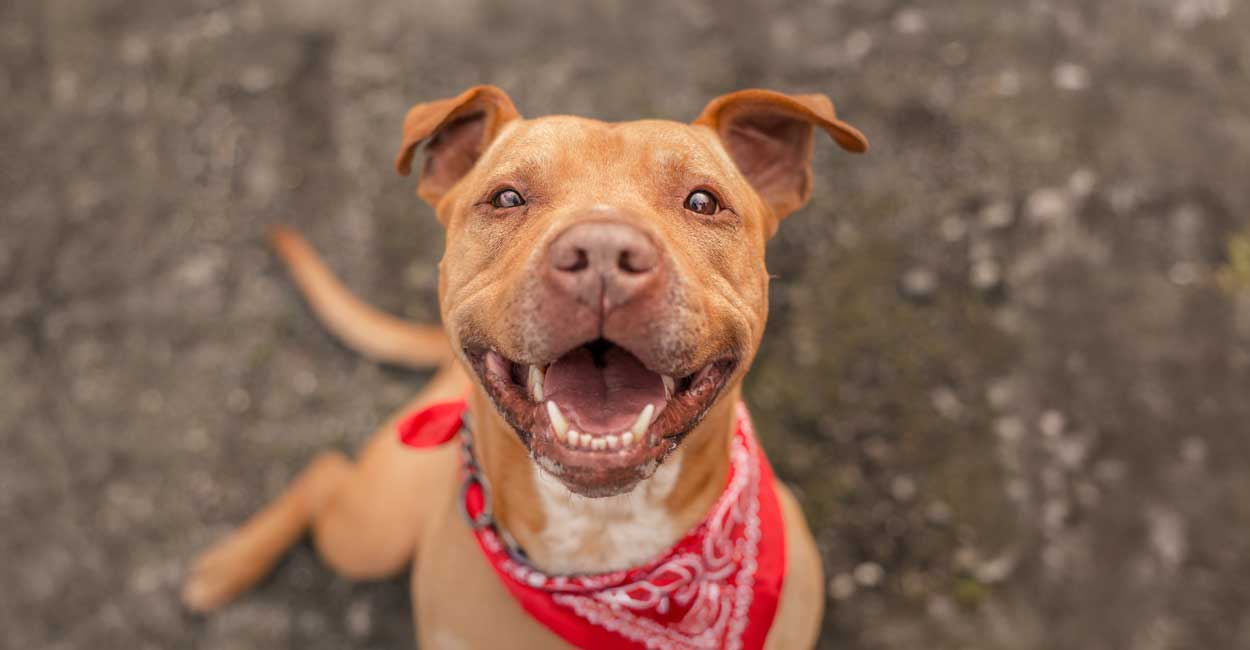
Tucker Pup's Rescue Reset Program helps rescue dogs in Chicago become well-adjusted to their new home and life, setting them up for long-term happiness. We offer personalized private training sessions that lay the foundation for addressing common challenges that rescue dogs face in their new home, such as fears and anxieties, feeling unsettled, and lacking trust. Our goal is to help prevent difficult challenges such as separation anxiety or leash reactivity. We will help your rescue dog build confidence and coping skills in order to thrive amid the sights, sounds, and activities of life in Chicago.

Newly rescued dogs need help
overcoming past trauma
Program Snapshot
- Format: Private lessons with you and your dog
- Location: At your home or our training facility
- Behaviors: We can help your dog build healthy emotional responses to scary objects or environments, such as guests, elevators, strangers, other dogs, the vet, and much more
- Customization: We can customize the program to your dog's needs, such as adding elements from other programs and focusing on what is most important to you — it is not one size fits all
- Will this work for my dog? Our trainers have successfully implemented our methods with thousands of dogs just like yours, even in severe cases where progress may seem hopeless
- Why newly rescued dogs need specialized training: Living in a new home can be very stressful for a dog, leading to anxiety, fears, reactivity, and a lack of learning — this program teaches a number of exercises to relieve this stress and potential reactivity so you can build a positive relationship much faster
- Time commitment: Your trainer meets with you every 1-2 weeks over the course of a few months and provides guided home exercises that you can practice for 30 minutes or less per day
- Expertise: You will work with a trainer who has significant experience in working with rescue dogs and complex behavioral challenges including general anxiety, leash reactivity, resource guarding, guest anxiety, separation anxiety, and much more
- Positive Reinforcement: We use positive reinforcement methods because they create faster learning, stronger long-term habits, and more reliable behavioral improvement than correction-based methods such as prong collars
- Tucker Pup's Training System: A structured, proven training system that combines home exercises, step-by-step videos, and personalized recommendations - all supported by an online platform that keeps everything organized and includes tools that maximize your success
- Long-term follow-up: Check-in Zoom calls available for 12 months after the program to help maintain progress
- Investment:
- $135 for an assessment
- $175 per session, plus $10 if we come to your home
Full program details below.
Behaviors We Can Improve
- Building healthy emotional responses to scary objects or environments, such as guests, elevators, strangers, other dogs, the vet, and much more
- Adjusting to new routines
- Learning boundaries
- Learning independent play and relaxation
- Overcoming challenging behaviors such as separation anxiety
- Listening and manners, such as loose leash walking
- Any behavior you want to address - the program is highly customizable
How Progress Feels
Dogs may become more comfortable moving through the home, resting more easily, and engaging with their owners with greater confidence. As trust builds, many dogs show less vigilance, recover more quickly from unfamiliar situations, and begin to explore their environment without constant stress or hesitation.
Over time, owners often notice that routines feel smoother and communication becomes clearer. Dogs develop coping skills that help them handle everyday experiences, such as being left alone, encountering new people or dogs, and navigating busy environments. This early support can reduce the likelihood that anxiety-based challenges escalate into more significant issues later on.
Progress is not about rushing adjustment or forcing confidence. It is about giving rescue dogs the time, structure, and guidance they need to feel safe, understand expectations, and build a strong foundation for long-term success in their new life.
We can help turn that frown upside down
A Happy Customer
Shaina Norton, CPDT-KA
Dog Trainer
We adopted our dog, Daisy, from PAWS in December of 2024. It was her second time there in just 6 years, which has left her very anxious and scared of the outside world - especially of other dogs. We found Tucker Pups and started a 6-session regimen with one of their trainers, Shaina.
Shaina was truly amazing! We could tell she genuinely cared for our dog, and we’re so impressed by the improvement we’ve seen in her behaviors! Every single trip out of the house used to result in an extremely stressful reaction to dogs, trucks, etc and now Daisy is able to ignore most dogs and not react in a way that ruins her whole day. Shaina was always available and always responded so quickly when we needed something or had a question. We’re truly so thankful for her and the work she’s done with Daisy!Holly Taylor
Is This the Right Training Program for Your Dog?
- Takes less than 60 seconds
- Clear recommendations based on your dog and your goals
- Immediate results — no email required
Why Tucker Pup's is Your Rescue Solution
- We have a large team of professional, highly experienced trainers who have helped many rescue dogs overcome their anxiety and live happy lives
- Positive reinforcement only, the fastest and best way to train dogs — this is a must for rescue dogs who are stressed, fearful, or anxious!
- The Tucker Pup's Training System ensures that you have exercises you can work on with your dog that actually work, expert recommendations, and software platform that maximizes your chance of success
- Strongest reputation in Chicago: 1,107 Google Reviews, with a 4.9 overall average
- In business since 2006
Full program details below.
The Tucker Pup's Training System
The Tucker Pup Training System is a comprehensive, cohesive approach to training — built around home exercises and supported by our TrainTrack platform, so real progress continues between sessions and everything stays organized and on track.
Carefully curated home exercises
We teach you the best home exercises, so you can build repetition and real learning in 30 minutes or less per day
Step-by-step training videos
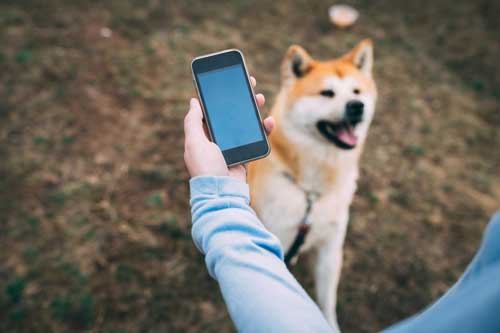
Clear instructional videos that demonstrate how to perform the home exercises, so you easily remember all of the steps
Personalized recommendations
Daily adjustments designed specifically for your dog, goals, and home environment (private lesson programs only)
TrainTrack platform
Access everything in one place so you maximize your success — view videos of your assigned exercises, read handouts, and track your progress (additional features available in private lesson programs, including video uploads to your trainer and more)
Watch Videos of Home Exercises on Your Device
Program Details
This includes:
- Adjusting to a new routine
- Learning boundaries
- Building healthy emotional responses to objects and sounds that may be new and scary
- Teaching independent play and relaxation
We can help with other behaviors as well - just ask!
Please note that this program is focused on building foundational behaviors for long-term success, and does not necessarily address manners skills such as loose leash walking, or emotional challenges such as separation anxiety - we have other programs for improving these behaviors. We may be able to incorporate some of them into this program, or can focus on them after completing this program. Your trainer can help identify the best path moving forward, based on your goals.
Additional potential costs:
- $10 per session if we come to your home
- Reimbursement for any parking fees that we incur
Don't try to go it alone - we can save you lots of time, money, and headaches!
FAQs
How soon should I start this program with my rescue dog?
Before starting this program, we recommend that you give your new dog at least three weeks to settle into your home so that she can learn your routines and adjust to being outside of the shelter. Most dogs need this time to decompress and get used to new family members, new surroundings, and a new schedule. It’s important to not overwhelm your dog with too many new experiences at once, but rather just give her a chance to settle in slowly. However, if you are having serious behavioral concerns, please contact one of our training advisors, and we can likely help sooner. Even though you should wait a few weeks, you still need to enroll as soon as possible so you get the dates and times that work best for your schedule.
Does the age of my dog matter for this program?
The Rescue Reset Program is for dogs of all ages; however if you just recently rescued a puppy under the age of 5 months that is not displaying overly negative behaviors, they may be better suited for our Puppy Socialization Program or a Puppy Manners course. Check out our “Puppy Page” for more information.
What if I rescued my dog as a stray, or found my dog on the street?
No matter how much or how little background information you have about your new dog, the Rescue Reset Program is ideal for anyone who wants to help their dog acclimate to living in a new environment. Whether your dog was transferred here from an out-of-state shelter, fostered locally, or found in dire circumstances, our trainers have lots of experience working with dogs from all walks of life. It is our goal to help your dog feel confident and truly at his forever home so you don't feel the need to relinquish him later.
Is it better to work at my home, or at the training facility?
For many dogs, working at home fosters a better learning environment and eliminates extra travel stress or new environment anxiety in the early stages of learning. On the other hand, coming to our training facility can have its advantages, as we have resources such as barriers, cones, stuffed dogs, different types of harnesses, numerous treat options, and other people to practice with. The training location can be customized by scheduling some sessions at home and some here. Just speak with your trainer on what would be the best fit for you and your dog.
Will this program address issues such as separation anxiety?
This program is about decompressing your dog and helping eliminate stress about living in a new environment, while overcoming possible trauma from living at a shelter. It is intended to help prevent behaviors such as separation anxiety or leash reactivity. If your dog is exhibiting those behaviors, we can address them in programs specifically intended to resolve them. It may be possible to mix and match - just ask your trainer.
You're Not Alone
Many rescue dogs arrive after experiencing disruption, uncertainty, or stress, and it is common for them to feel unsettled at first. They may seem unsure of their surroundings, hesitant to relax, or slow to trust. Some dogs appear withdrawn, while others are constantly alert, pacing, or reacting to everyday sights and sounds.
For owners, it can be hard to know what is normal during this adjustment period. Questions often come up about whether a dog is still settling in, needs more time, or is developing challenges that should be addressed sooner rather than later.
If you are navigating this transition with a rescue dog, you are not alone. Many thoughtful, committed owners experience the same uncertainty, and it does not mean you are doing anything wrong. With the right guidance, this adjustment period can become an opportunity to build trust, confidence, and a strong foundation for the life you want to share together.
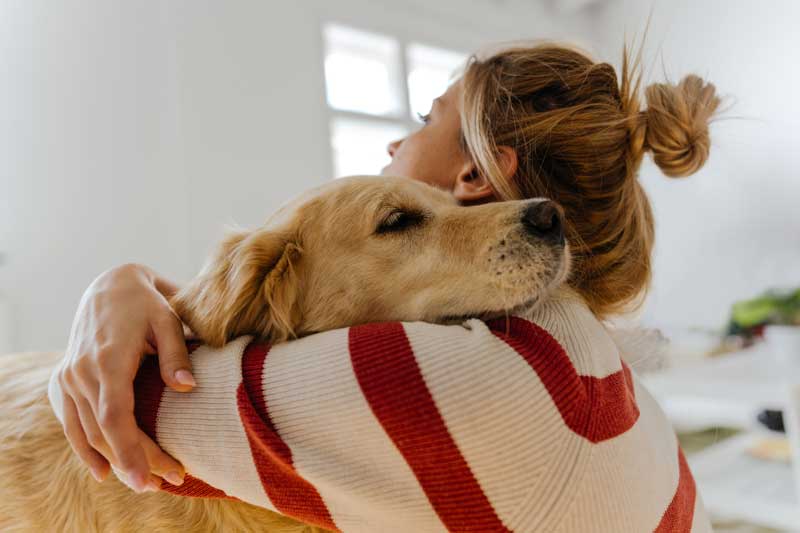
Why Newly Rescued Dogs Often Struggle
Even dogs with a gentle temperament may have experienced instability, stress, or unpredictability before adoption. They may have lived in multiple environments, spent time in shelters, or had limited opportunities to form consistent routines and trust. As a result, many rescue dogs arrive in their new home unsure of what to expect or how to navigate daily life.
This uncertainty can show up in different ways. Some dogs seem shut down or hesitant to engage. Others are hyper-alert, pacing, barking, or reacting strongly to everyday sounds and movement. Common challenges include difficulty settling, anxiety when left alone, leash tension, sensitivity to new people or dogs, and trouble feeling safe in unfamiliar environments.
These behaviors are not signs of a bad fit or permanent issues. They are often a natural response to change and uncertainty. With guidance, structure, and the right support early on, rescue dogs can learn that their new home is predictable, safe, and worth trusting.
That early foundation is what allows many rescue dogs to relax, build confidence, and truly settle into their new life.
Positive Reinforcement Methods
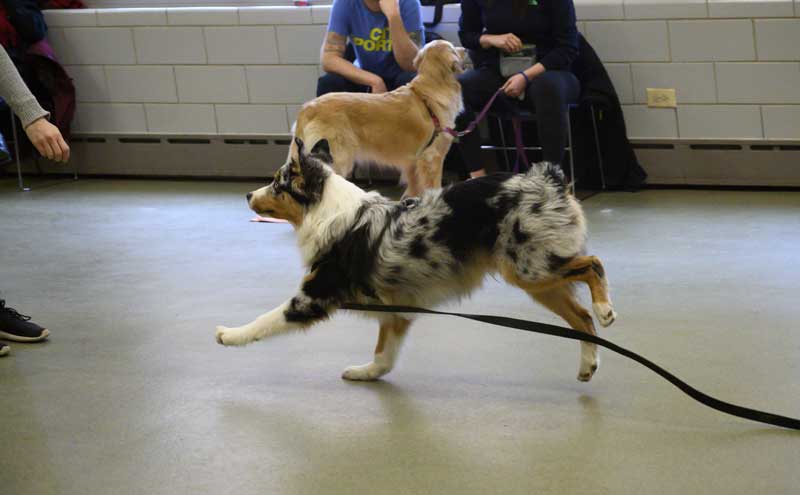 Tucker Pup's only uses positive reinforcement, which combines the use of rewards, an encouraging tone of voice, and relaxed body language.
 We do not use aversive methods include prong collars, choke chains, shock collars, poking, yelling, or leash popping. If you are using any of these with your dog, we can help you successfully stop, and still get the results you want.
Positive reinforcement gives you the best chance of success, and can be the fastest way to get results. Aversive methods cause distrust, fear, and potentially pain or discomfort, all of which can be detrimental to getting the results and relationship that you want.
Common questions:
- Do I need to carry treats for the rest of my dog's life? Treats are for teaching behaviors - once your dog can reliably perform, treats can be phased out at your discretion.
- Do I need to carry treats at all times? No. If there are times where you are not carrying treats, our methods can still work.
- Can I use a different type of reward than treats? It may be possible to use something else your dog values, such as a favorite toy.
- Is positive reinforcement too soft for my dog? Not a bit. The best way to build reliable skills is through trust and motivation. Being tough with your dog can cause him to shut down, have anxiety, ignore you, and not truly learn.
- I have tried treats, but they don't work for my dog. You were likely using low-value treats, including from a store. We will recommend high-value treats that are irresistable for most dogs, including in high-distraction environments.
- Will it take longer to achieve results? This is a common myth. Positive reinforcement can create faster results than aversive methods, because your dog is motivated to listen to you, and truly wants to learn.
- Is it bribery? No! All animals learn behaviors from being rewarded, including humans. You wouldn't go to work for free, would you? Motivation + repetition = new behaviors.
If you are hesitant, please trust us on this one and feel free to ask us questions.
Neighborhoods We Serve
Tucker Pup's is located in the West Loop / Fulton Market District neighborhood. People come to us from all over Chicago, especially from Bucktown, Gold Coast, Lake View, Lincoln Park, Old Town, River North, River West, South Loop, Streeterville, Ukrainian Village, University Village, West Town and Wicker Park.