
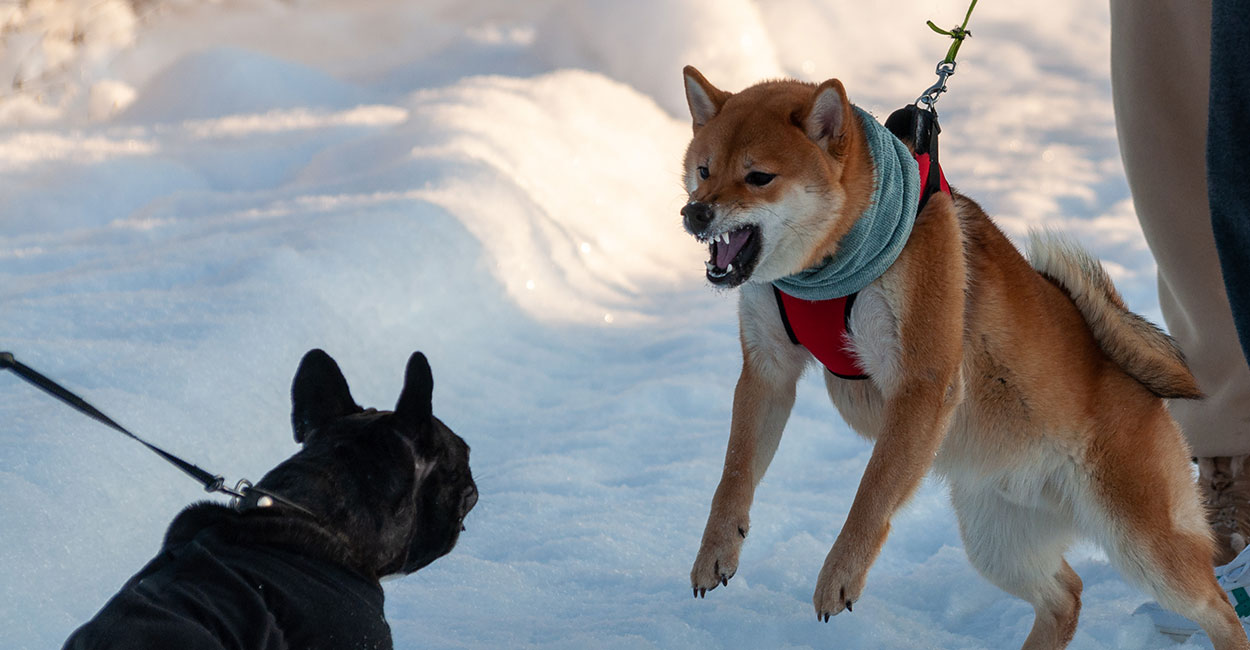
Our Reactive Dog Training Program is designed to help dogs who struggle with strong emotional reactions to other dogs or people. Whether your dog experiences leash reactivity, stranger danger, dog-dog aggression, barking at the window, or resource guarding, we focus on understanding the underlying causes and helping your dog feel safer and more confident around their triggers. Using thoughtful, structured training, we work to build calmer responses and better decision-making in everyday situations. The result is less stress, improved safety, and a more enjoyable life together. Take the first step towards better social encounters by booking a phone consultation with a Training Advisor.
Program Snapshot
- Format: Private lessons with you and your dog
- Location: Either at your home or our training facility in Fulton Market, including walks if appropriate
- Positive Reinforcement: We use positive reinforcement methods, which is the fastest and best approach for reducing reactivity
- Price:
- $135 for an assessment - your trainer will then propose the number of sessions they estimate will make an impact
- $175 per session, plus $10 if coming to your home
Full program details below.
Is This the Right Training Program for Your Dog?
- Takes less than 60 seconds
- Clear recommendations based on your dog and your goals
- Immediate results — no email required
Behaviors We Can Improve
Please note that when enrolling in the program, we can focus on a few behaviors, but not all at once. A trainer will conduct an assessment first, in order to determine your goals and areas of focus.
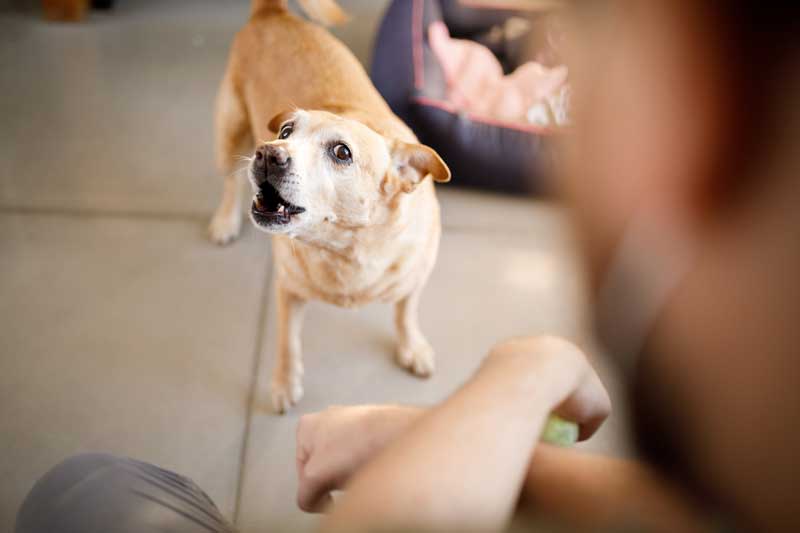
Tucker Pup's is Your Reactivity Solution
Why we are are your go-to solution:
- We have a full team of highly professional trainers who are very experienced with reactivity, including with strong credentials and certifications
- We can come to your home or our training facility
- A structured, proven approach - not guesswork
- TrainTrack portal enables you to watch videos of exercises covered, log your progress, and upload videos to your trainer
- Positive reinforcement only, the fastest and best way to overcome reactivity
- Strongest reputation in Chicago - 1,109 Google Reviews, 4.9-star overall rating
- In business since 2006
A Happy Reactivity Training Customer
Dog Trainer
Maureen was excellent. Our Pittie/staffie pup went from needing fences and sheets between him and strangers (sessions 1-4) to having Maureen doing home visits and, during our last session, allowing me and my partner to leave him and Maureen alone in the house. The progress has been outstanding, and we’ll continue to use Tucker Pups—Maureen specifically—for future training needs.
Zoe Lindner
Program Details
- Location: We will meet with you at your home, at or our facility, or over Zoom to help give you a plan for moving forward.
- Dog Diagnostic: Your trainer will conduct an in-person assessment with you and your dog to identify the behaviors to address, likely triggers, and a training plan. You can pay for just the assessment before purchasing the program.
- Frequency: Typically 1-2 weeks apart
- Duration: Sessions are 1 hour long
- Checkin Meetings for a Year: You can have up to four 30-minute checkin meetings with your trainer for up to a year after the program ends
- TrainTrack: Use our online portal to access videos, log your progress, and upload videos to your trainer
Our Travel Radius
One of our trainers can home to your home if you live within our travel radius. We routinely go all throughout Chicago each day, including to Lakeview, Lincoln Park, Bucktown, Wrigleyville, Gold Coast, River North, downtown, East Loop, West Loop, South Loop, and all neighborhoods in between.
These boundaries go north to Irving Park Road, east to the lake, south to Roosevelt, and west to Western Avenue.
If you live a few streets beyond these boundaries we can likely still come to your home.
Otherwise, you would need to come to our training facility.
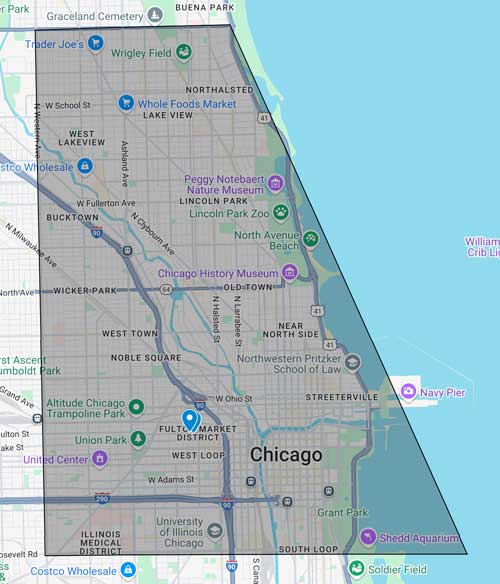
Our Trainers Travel All Over Chicago
Price and Payment Options
- $135 for the initial assessment, typically at your home.
- $175 per session for the training - the trainer will give you a proposed number of sessions after the assessment
- $10 per session if we come to your home
- Any parking reimbursement as incurred
- Credit card
- Payment plan
- PayPal Credit, where you can pay it back over time, and the first 6 months are interest free
FAQs
Can I combine topics or behaviors from other programs?
Yes, it is very possible to combine topics from other programs. For example, if we are working with you on reactivity, your dog may possibly have some noise sensitivity. The program is just a starting point, and we can extend it however you need. However, please keep in mind that you may not be able to truly resolve numerous difficult challenges at once, as the training does require homework in between sessions with lots of repetition. Trying to do this for too many behaviors concurrently may not be realistic. It is always possible to add certain for certain behaviors after addressing other ones first. It all just depends, and your trainer can discuss the training plan with you further.
Do I need to work on all of the behaviors listed above, if my dog just needs help in one area?
Definitely not. The list above is to give you an idea of what we can help with in the reactivity category. Your trainer will start with an assessment, then recommend which one(s) to tackle.
Is it better to work at my home, or at the training facility?
For many dogs, working at their home can be better, since they may have anxiety about entering a new space. On the other hand, coming to our training facility can have its advantages, as we have resources such as barriers, cones, stuffed dogs, different types of harnesses, numerous treat options, and other people to practice with. You can even do some at home and some here. Just speak with your trainer.
Is it guaranteed that my dog's reactivity will go away?
No trainer in the entire world can make that guarantee. There are a lot of factors in play, such as whether you do the homework each week, whether you stay committed to positive reinforcement methods, plus your dog's genetics and level of emotions. Most dogs do make tremendous strides by going through the program, even if this means reducing their reactivity significantly instead of eliminating it altogether. It is a process that takes time, including once the training has concluded.
I want to use a prong collar or choke chain to show my dog who is in control
Aversive equipment such as prong collars, choke chains, shock collars, and squirt bottles can cause more harm than you realize, because they can cause pain and discomfort, leading to a lack of trust. We have sucessfully used positive reinforcement methods with thousands of dogs and ask that you give this model a try. We believe you will be pleasantly surprised.
Can we work on manners in conjunction with reactivity?
That depends. If your dog is reactive to other dogs or people, it can be very difficult to make any progress with outdoor activities such as leash walking. It could be possible to work on indoor manners training, such as dropping items, but you will likely get different results the moment you go outside, due to stress and fear. Our team can discuss options with you.
Can I start with just a few sessions to see if the program is working?
You would likely not get tremendous gains in the very beginning, as it is a process that takes time. Many dogs show significant improvement after lots of repetitions. You have to be patient and trust the process. Having said that, you could start with a few sessions to start to get a feel for the trainer and the process, but their schedules fill up fast so you might lose the time slots that work best for you if you delay in truly moving forward.
Why Hiring Us Beats Going it Alone
Reactivity is one of the hardest behavior issues to solve without guidance—and the wrong approach can actually make the situation potentially dangerous.
Benefits of our training programs:
- We give you immediate feedback that takes into account your technique, your environment, your lifestyle, your dog's background, and likely reasons for your dog's lack of progress. No online tool can match that insight.
- Avoid wasting hours sifting through conflicting advice online, much of which is incomplete, outdated, and potentially harmful — follow a structured, proven plan instead
- Avoid common mistakes that can make reactivity worse
- Use TrainTrack to maximize your chance of success
- Stay consistent with guidance and accountability throughout the process
Reviews from Reactivity Customers

Yelp has listed Tucker Pup's as one of the top 100 local businesses in the country in 2025. We are the only pet business who made the list from Chicago, and the only pet resort / training business who made the list nationally.
See the List


You Are Not Alone
For example, their dog may be friendly, affectionate, and well-behaved in familiar settings - yet suddenly bark, lunge, freeze, or stare intensely at other dogs on walks. These reactions can feel embarrassing and stressful, especially when they seem to come out of nowhere.
For many owners, walks slowly become something they dread rather than enjoy. They may avoid certain routes, cross the street to dodge other dogs, or shorten outings altogether. Over time, this can create frustration, worry, and a sense that something is wrong with their dog or with their training.
The same can be said for many other reactivity-based behaviors, such as resource guarding.
If this sounds familiar, you are not alone. Reactivity is one of the most common challenges we see, and it affects dogs and owners across all breeds, ages, and experience levels.
Why Reactive Behaviors Happen
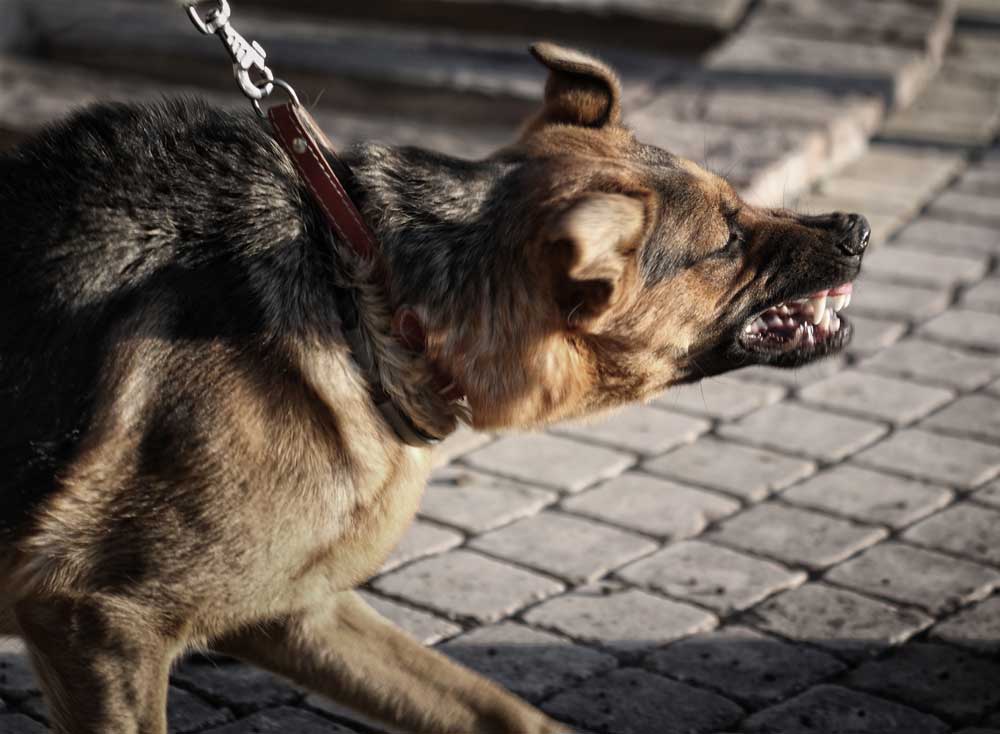
In many cases, it happens when dogs feel overwhelmed and unable to cope with what is happening around them. For example, when on walks, the leash limits movement and prevents a dog from creating distance, which can make ordinary situations feel intense or threatening. When another dog, person, or unexpected movement appears, stress can rise quickly.
Some dogs react because they feel trapped. Others react because they are unsure how to handle the situation, or because past experiences have taught them that certain encounters feel unsafe. Genetics and temperament can also play a role in how strongly a dog responds to stress. Resource guarding can be caused by a feeling of scarcity - if you take away the bowl or toy, they feel like they will never get it back.
Once emotional arousal crosses a certain threshold, the reaction is no longer a choice. Barking, lunging, gnashing teeth, or intense staring are signs that the dog is no longer able to stay regulated in that moment.
Understanding that reactivity is an emotional response, rather than a training failure or conscious choice, is an important step toward meaningful progress.
What Progress Can Look Like
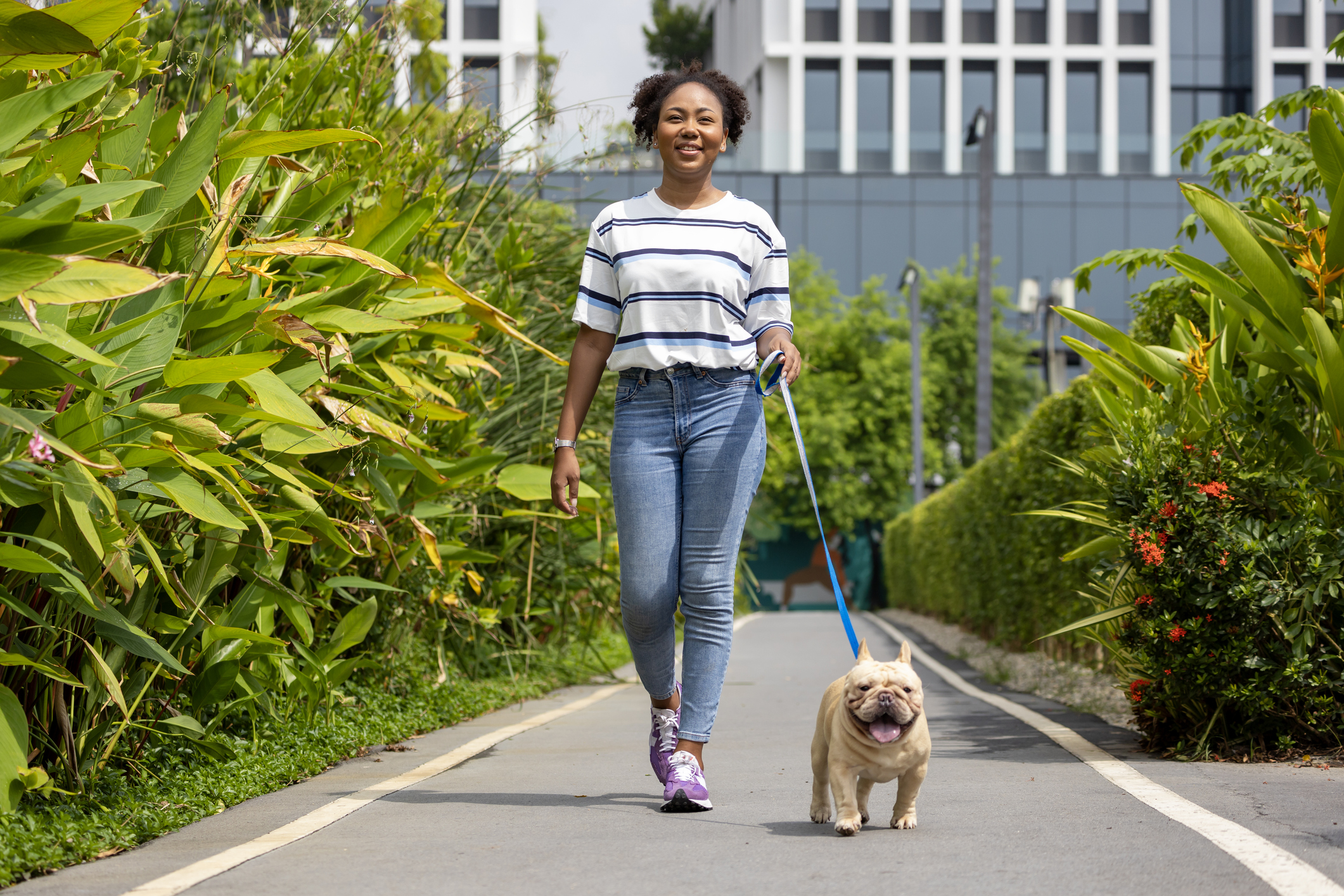
As dogs learn how to stay regulated and process their environment more effectively, reactions often become less frequent, less intense, and easier to manage. Many dogs reach a point where they are able to walk past people, dogs, and common triggers calmly, without escalating into barking or lunging.
Owners frequently notice that walks feel more relaxed and predictable. Instead of constant vigilance or avoidance, they can move through their neighborhood with greater confidence, knowing their dog has the skills to handle distractions. Dogs are better able to stay engaged, recover quickly from unexpected moments, and make thoughtful choices even when the environment is stimulating.
Progress does not mean perfection in every situation. But for many dogs, it means a dramatic improvement in day-to-day life — calmer walks, fewer reactive episodes, and a stronger sense of trust and communication between dog and owner.
Positive Reinforcement Methods
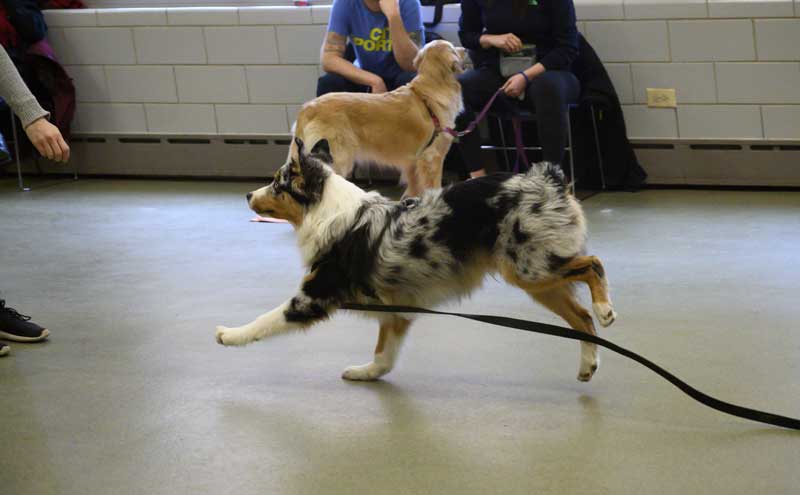 Tucker Pup's only uses positive reinforcement, which combines the use of rewards, an encouraging tone of voice, and relaxed body language.
 We do not use aversive methods include prong collars, choke chains, shock collars, poking, yelling, or leash popping. If you are using any of these with your dog, we can help you successfully stop, and still get the results you want.
Positive reinforcement gives you the best chance of success, and can be the fastest way to get results. Aversive methods cause distrust, fear, and potentially pain or discomfort, all of which can be detrimental to getting the results and relationship that you want.
Common questions:
- Do I need to carry treats for the rest of my dog's life? Treats are for teaching behaviors - once your dog can reliably perform, treats can be phased out at your discretion.
- Do I need to carry treats at all times? No. If there are times where you are not carrying treats, our methods can still work.
- Can I use a different type of reward than treats? It may be possible to use something else your dog values, such as a favorite toy.
- Is positive reinforcement too soft for my dog? Not a bit. The best way to build reliable skills is through trust and motivation. Being tough with your dog can cause him to shut down, have anxiety, ignore you, and not truly learn.
- I have tried treats, but they don't work for my dog. You were likely using low-value treats, including from a store. We will recommend high-value treats that are irresistable for most dogs, including in high-distraction environments.
- Will it take longer to achieve results? This is a common myth. Positive reinforcement can create faster results than aversive methods, because your dog is motivated to listen to you, and truly wants to learn.
- Is it bribery? No! All animals learn behaviors from being rewarded, including humans. You wouldn't go to work for free, would you? Motivation + repetition = new behaviors.
If you are hesitant, please trust us on this one and feel free to ask us questions.
TrainTrack Platform
Re-Watch Training Exercises on Your Device
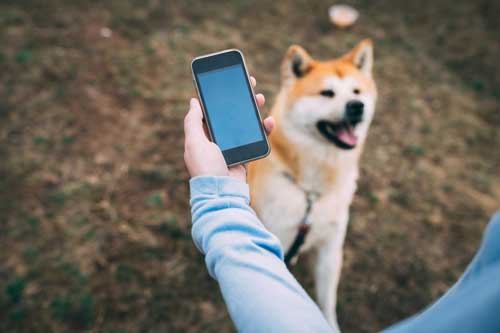
The trainer will show you the exercises in person, then you can access TrainTrack to see the homework and other helpful information. Many exercises include videos, and all of them include instructions. It also includes handouts and a documentation of what you covered. This is incredibly helpful because there is a lot of information to take in, and it can be hard to remember everything that was demonstrated and discussed.
In addition, you can log your progress on TrainTrack as you are working on your home exercises. This can be invaluable for ensuring that you spend enough time, in various settings, for your dog to learn the methods thoroughly.
For private lessons, you can even upload videos to your trainer, and they can watch them in between sessions to help provide advice.
TrainTrack works on any Internet-connected device, so you can use it on your mobile phone, even when you're on a walk or working outdoors.
TrainTrack is used for all of our training services, including private lessons and classes.
To access TrainTrack, you must log in to our website. On your Customer Center, you will see the link to TrainTrack towards the top of the page.
Neighborhoods We Serve
Tucker Pup's is located in the West Loop / Fulton Market District neighborhood. People come to us from all over Chicago, especially from Bucktown, Gold Coast, Lake View, Lincoln Park, Old Town, River North, River West, South Loop, Streeterville, Ukrainian Village, University Village, West Town and Wicker Park.
- Is This the Right Training Program for Your Dog?
- Behaviors We Can Improve
- Tucker Pup's is Your Reactivity Solution
- A Happy Reactivity Training Customer
- Program Details
- Our Travel Radius
- Price and Payment Options
- FAQs
- Why Hiring Us Beats Going it Alone
- Why Hiring Us Beats Going it Alone
- Reviews from Reactivity Customers
- You Are Not Alone
- Why Reactive Behaviors Happen
- What Progress Can Look Like
- Positive Reinforcement Methods
- TrainTrack Platform
- Neighborhoods We Serve