

Separation anxiety can make you feel like a prisoner in your own home — unable to leave without stress or worry.
Our program helps your dog feel calm, confident, and safe when left alone — even if you’ve struggled with this before. Through a gradual, structured approach tailored to your dog’s specific triggers, we guide you step by step so you can leave with peace of mind and return to a calmer, happier dog.

Program Snapshot
- How it works: Weekly Zoom calls with your trainer, combined with simple daily steps (about 30 minutes) that build progress at a manageable pace. You'll have ongoing support throughout.
- Why this approach works: Your trainer observes your dog in real-life situations (like you leaving the home), which allows for precise guidance. Dogs behave differently when a trainer is physically present — Zoom ensures training is accurate and effective.
- Will this work for my dog? Most dogs begin showing meaningful improvement during the program, including more severe cases, as they learn to feel safe and relaxed when left alone, even if other methods haven't worked.
- Program timeline: A structured 4-week program where you learn and begin applying proven strategies that create meaningful progress, with continued improvement as you build consistency over time and the option to continue if needed.
- Expertise: You will work with a trainer certified specifically in separation anxiety, with extensive experience in helping dogs like yours.
- Ongoing guidance: Use our TrainTrack portal to follow recommendations, track progress, and share videos for feedback.
- Long-term follow-up: Check-in sessions available for 12 months after the program to help maintain progress.
- Flexible access: This program is available from anywhere, via Zoom
- Investment:
- $850 for the program
- $150 for initial 90-minute assessment, which happens over Zoom
- Flexible payment options available
Full program details below.

Weekly Zoom calls deliver the best results
What Progress Can Look Like
As dogs learn how to feel safe when alone, panic responses often decrease or disappear. Dogs may become calmer during departures, settle more quickly after their owner leaves, and remain relaxed for longer periods of time. Panic-based behaviors often lessen as the dog gains confidence and emotional stability.
Owners frequently report that they no longer feel anxious about leaving the house or worried about what they will come home to. Daily routines become easier, and dogs are able to spend time alone without distress dominating the experience. Many people can go back to the office, to the store, or even out for social activities. For many families, this results in a dramatic improvement in quality of life for both dog and owner.
The goal of the program is not short-term management, but lasting emotional change so separation anxiety no longer defines your dog's daily experience.

Is This the Right Training Program for Your Dog?
- Takes less than 60 seconds
- Clear recommendations based on your dog and your goals
- Immediate results — no email required
Tucker Pup's is Your Separation Anxiety Solution
Why we are your go-to solution:
- Experienced trainers who specialize in separation anxiety and are highly professional
- A structured, proven approach - not guesswork
- Our Zoom format deliver better results than in person, as we see your dog true behaviors
- Positive reinforcement, the best style for helping dogs with separation anxiety
- TrainTrack portal for reviewing homework, logging progress, and uploading videos to your trainer
- Strongest reputation in Chicago - 1,107 Google Reviews, with a 4.9 overall average
- In business since 2006
Featured Trainer
Sidney Warbinton is our lead separation anxiety trainer and is professionally certified in this behavior. She has successfully helped many people and dogs over the years with this condition. She has dedicated her career to working on separation anxiety, only using positive reinforcement methods.
View Sidney's bio
Program Details
- Number of sessions: Customizable to your situation. Most customers start with 4 sessions
- Session duration: One hour per session
- Location:
- Zoom: This is the primary format of the program and includes one weekly meeting
- At your home: A trainer can also come your home to see your home environment, and can possibly address multiple behaviors at once
- Frequency: One live meeting per week, plus online instruction on four of the other days
- Dog Diagnostic: The first step is an assessment over Zoom. You can pay for just the assessment with no obligation to continue.
- Veterinary collaboration: If medications are being used or considered, we can work closely with you and your vet to give our observations and help ensure they are having the desired effect. We can even join you at the vet if they are in our service area.
- TrainTrack: Access our online training portal for videos, logs, video uploads to your trainer, and more
- Checkin meetings: You can have checkin meetings with your trainer for up to a year after your program ends
Don't try to go it alone - one of our experienced trainers can help you right away.
Price and Payment Options
- Zoom-only:
- $150 for 90-minute assessment and overall plan for the program
- $850 for four weeks
- If we come to your home:
- $185 per session. This is typically for one training session, if you want us to see your home environment in person and discuss other behaviors you want to improve. The core program is via Zoom.
- Any parking as necessary
Payment options:
- Credit card
- Flexible payment options
- PayPal Credit, where you can pay it back over time, with six months of free interest
Reviews from Separation Anxiety Customers

Yelp has listed Tucker Pup's as one of the top 100 local businesses in the country in 2025. We are the only pet business who made the list from Chicago, and the only pet resort / training business who made the list nationally.
See the List


FAQs
How much experience do your trainers have in resolving separation anxiety?
We have multiple trainers who have helped many dogs overcome separation anxiety. They are well-prepared, stay updated on the latest industry advice, and are committed to helping you succeed.
Can you fully eliminate my dog's separation anxiety?
We have had great success in helping many dogs minimize or even eliminate their separation anxiety. Having said that, there are no guarantees, since success depends on factors such as you following the exercises assigned each week, in addition to your dog's level of panic, genetic factors, and daily triggers. If you follow the advice in the program, at the least you should see a substantial reduction in the anxiety level.
How long will it take to achieve progress?
The answer to that question depends on your dog. In some cases, we start achieving success within a few weeks. In others, it can take longer. However, once we are starting to make progress, progress tends to occur faster because your dog's brain and stress will be starting to calm down and allow true learning to occur.
Can a trainer come to my home instead of meeting over Zoom?
The Zoom format is in place so the trainer can watch through to the camera to see how your dog responds when you leave. If the trainer came to your home, they would not be able to see your dog's reaction, since the reaction would be different due to a stranger being there. If you would like a trainer to come to your home to view your environment and see other behaviors, that is very possible, but you would still need the Zoom format for resolving the separation anxiety.
Can I combine behaviors from other programs?
If you are trying to improve multiple behaviors, there would need to be two programs - one for the separation anxiety, and one for the other behavior. Depending on trainer availability and your goals, it may be possible to have the same trainer for both programs, or you may have two different trainers. Alternatively, it may be best to do one program at a time. The trainer can discuss ideas with you to create the best plan for your dog.
Why Our Program Beats Going it Alone
Separation anxiety is one of the hardest behavior issues to solve without guidance—and the wrong approach can actually make it worse.
- We give you immediate feedback that takes into account your technique, your environment, your lifestyle, your dog's background, and likely reasons for your dog's lack of progress. No online tool can match that insight.
- Avoid wasting hours sifting through conflicting advice online, much of which is incomplete, outdated, and potentially harmful — follow a structured, proven plan instead
- Avoid common mistakes that can make separation anxiety worse
- Identify what’s happening in your home environment that’s holding progress back
- Use TrainTrack to track progress and get ongoing guidance
- Stay consistent with guidance and accountability throughout the process
TrainTrack Platform
Re-Watch Training Exercises on Your Device
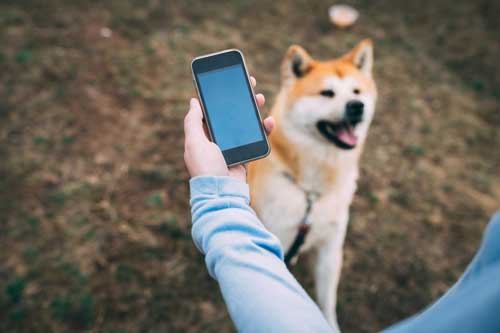
The trainer will show you the exercises in person, then you can access TrainTrack to see the homework and other helpful information. Many exercises include videos, and all of them include instructions. It also includes handouts and a documentation of what you covered. This is incredibly helpful because there is a lot of information to take in, and it can be hard to remember everything that was demonstrated and discussed.
In addition, you can log your progress on TrainTrack as you are working on your home exercises. This can be invaluable for ensuring that you spend enough time, in various settings, for your dog to learn the methods thoroughly.
For private lessons, you can even upload videos to your trainer, and they can watch them in between sessions to help provide advice.
TrainTrack works on any Internet-connected device, so you can use it on your mobile phone, even when you're on a walk or working outdoors.
TrainTrack is used for all of our training services, including private lessons and classes.
To access TrainTrack, you must log in to our website. On your Customer Center, you will see the link to TrainTrack towards the top of the page.
Why Separation Anxiety Happens
It occurs when being alone triggers distress and panic, making it difficult for a dog to self-regulate. Changes in routine, early struggles with independence, temperament, and past experiences can all contribute. In addition, many dogs who were adopted during COVID have developed separation anxiety, especially once owners started going back to work.
When anxiety takes over, behaviors like barking, pacing, destruction, or escape attempts are not intentional misbehavior, but signs that the dog feels overwhelmed.
Viewing separation anxiety as an emotional response rather than a discipline problem is an important step toward meaningful progress.
You're Not Alone
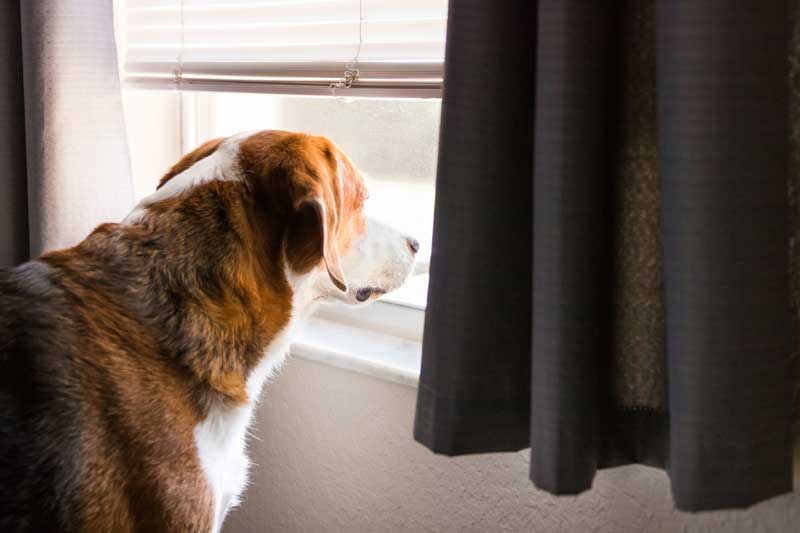
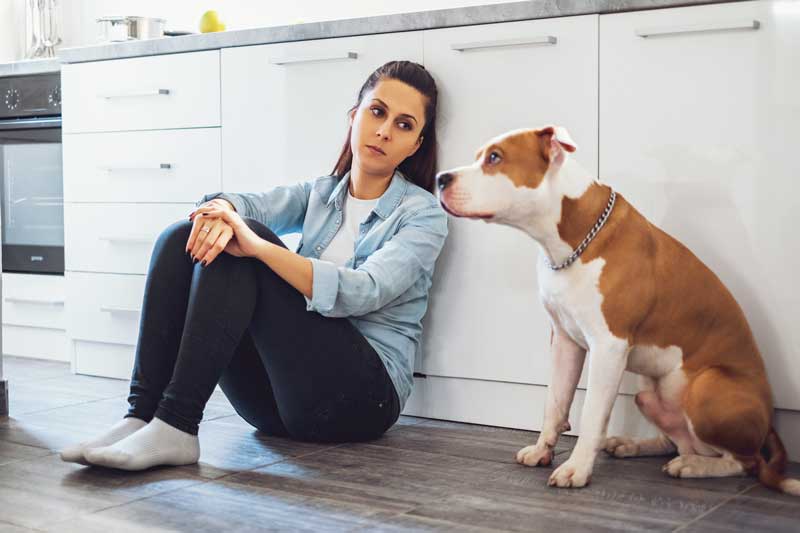
Many dogs struggle the moment they are left alone. This may show up as barking, pacing, destruction, attempting to escape, or other forms of visible panic. For owners, it can feel heartbreaking, exhausting, and like they are trapped.
People often blame themselves or assume they did something wrong. In reality, separation anxiety affects dogs of all breeds, ages, and backgrounds, including dogs who have had plenty of training. It is far more common than most owners realize.
If your dog struggles when alone, you are facing a challenge rooted in how your dog experiences separation, not in a lack of effort or care on your part.
Neighborhoods We Serve
Tucker Pup's is located in the West Loop / Fulton Market District neighborhood. People come to us from all over Chicago, especially from Bucktown, Gold Coast, Lake View, Lincoln Park, Old Town, River North, River West, South Loop, Streeterville, Ukrainian Village, University Village, West Town and Wicker Park.
- Is This the Right Training Program for Your Dog?
- Tucker Pup's is Your Separation Anxiety Solution
- Featured Trainer
- Program Details
- Price and Payment Options
- Price and Payment Options
- FAQs
- Why Our Program Beats Going it Alone
- TrainTrack Platform
- Why Separation Anxiety Happens
- You're Not Alone
- Neighborhoods We Serve